Vinyl Flooring
Waterproof Performance, Done Properly
Luxury vinyl has become the most-requested flooring in the region, and for good reason: it’s genuinely waterproof, it handles kids, pets, and traffic, and today’s texturing and printing make it convincing underfoot and under light.
But “vinyl” now covers an enormous range, from thin builder-grade product that shows wear in two years to commercial-grade plank that outlasts the business that installed it. The difference is in specs most people are never shown. We’ll show you.
We install luxury vinyl for homeowners and businesses across Northern New Jersey. Since 2011, with 20 years in the trade behind the work, we’ve laid it in basements, kitchens, rental units, storefronts, and family rooms, and we’ve learned that with vinyl, the material choice and the subfloor prep matter more than almost anything else.
The Spec That Decides Everything: Wear Layer
The wear layer is the clear protective coating on top of the printed design — and it’s the single best predictor of how long your vinyl will look new. It’s measured in mils (thousandths of an inch).
Wear layer
Suited for
Reality check
6 mil
Very light residential
Builder-grade; scratches show quickly
12 mil
Standard residential
Fine for bedrooms and low-traffic rooms
20 mil
Heavy residential / light commercial
The sweet spot for kitchens, pets, and family homes
28 mil+
Commercial
Retail, offices, rental turnover
Why this matters when you’re comparing quotes: two vinyl floors that look identical in a showroom can carry 6 mil and 20 mil wear layers. The cheaper quote is often cheaper for exactly that reason. Ask every contractor: “What’s the wear layer thickness?” It’s the fastest way to compare bids honestly.
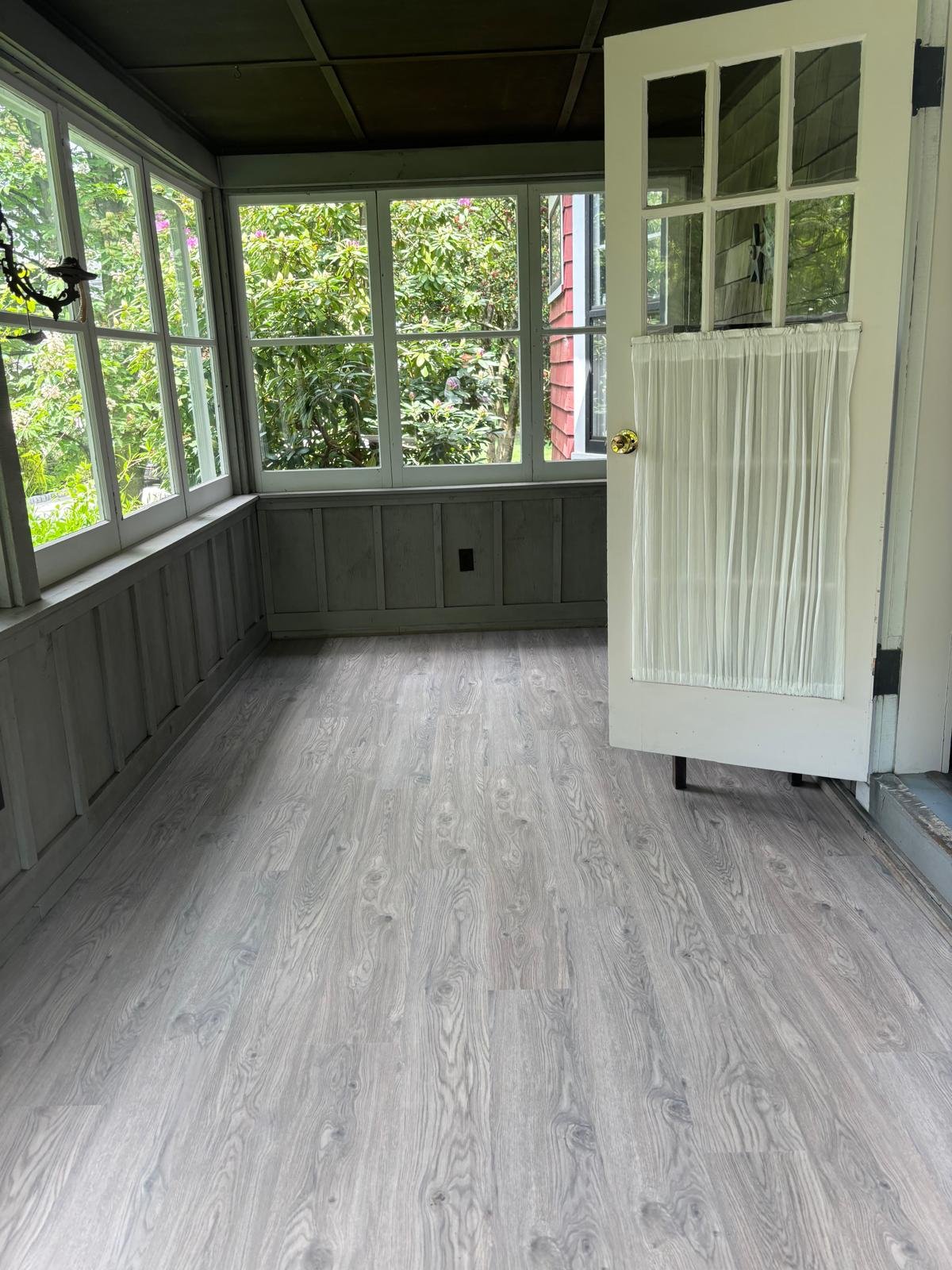
Also worth knowing — the core. Most quality LVP uses one of two cores: SPC (stone-plastic composite) is denser, more rigid, and more dimensionally stable — better over uneven subfloors and in spaces with big temperature swings, like a sunroom or a vacation property. WPC (wood-plastic composite) is slightly softer and warmer underfoot, often quieter. Both are waterproof. We’ll match the core to your space and how you use it.
The Honest Truth About "Waterproof"
Here’s a distinction the industry blurs: a waterproof plank is not the same as a waterproof floor.
The plank itself won’t swell, warp, or be damaged by water, that part is real. But water can still travel through the seams and edges and sit on the subfloor beneath it. On a floating installation, standing water from a burst pipe or an overflowing washer can reach the subfloor and cause exactly the damage the floor was supposed to prevent.
What this means practically: waterproof vinyl handles spills, mopping, wet boots, and bathroom humidity beautifully, the things daily life produces. For flood risk, it’s the right choice and it’s still not a guarantee. And it changes how we install: in high-moisture spaces, proper moisture barriers, sealed perimeters, and, in some cases, glue-down rather than floating installation all matter.
We’d rather explain this now than have you feel misled later.
What We Install
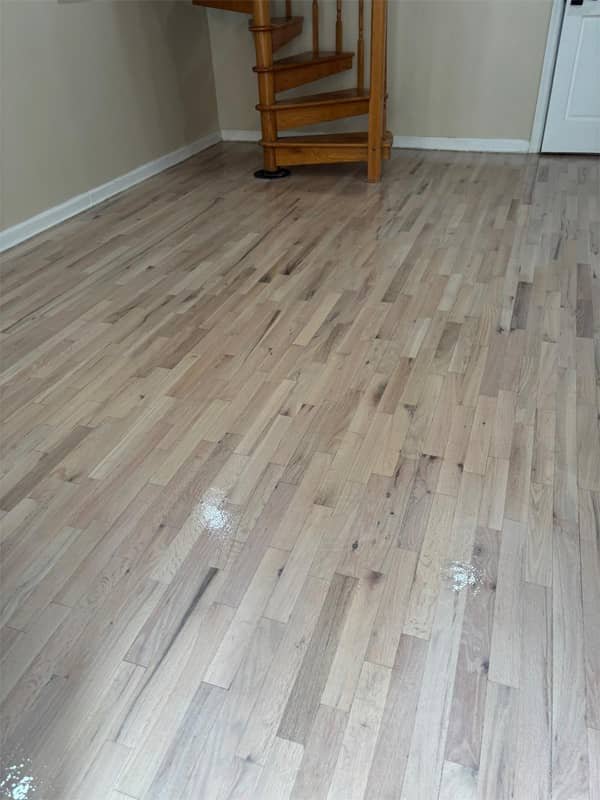
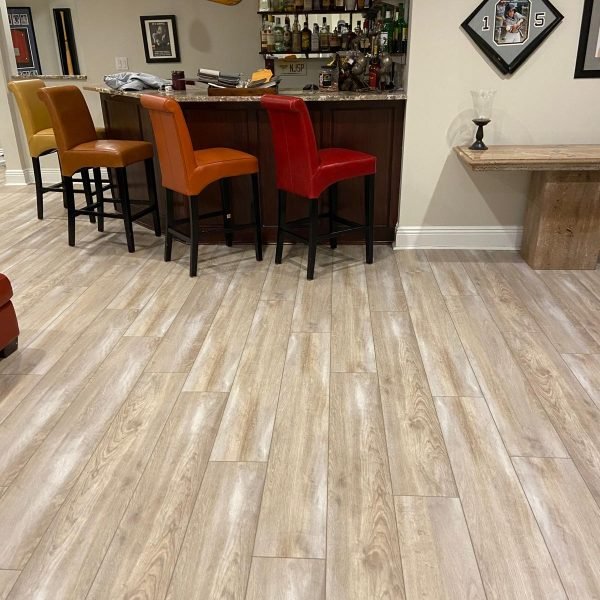
- Luxury Vinyl Plank (LVP) — wood-look, the most requested
- Luxury Vinyl Tile (LVT) — stone and tile looks, without the cold or the grout
- Waterproof vinyl flooring systems
- Floating and click-lock systems — faster installation, easier future repair
- Glue-down installations — the better choice for large open areas, heavy rolling loads, and many commercial spaces
- Residential and commercial vinyl flooring
Floating vs. glue-down, briefly: floating installs faster and allows individual planks to be replaced later. Glue-down is more stable underfoot, handles heavy rolling traffic better, and performs better in very large rooms and commercial settings. We’ll tell you which your space calls for and why.
Why Installation Quality Decides The Outcome
Vinyl is unforgiving of a bad subfloor. It’s thinner and more flexible than hardwood, which means it telegraphs, every ridge, dip, hump, and leftover blob of old adhesive eventually shows through the surface or creates a hollow spot underfoot.
Our process:
- Remove existing flooring where needed, including old adhesive residue
- Inspect and prepare the subfloor — flatten, level, and check moisture, especially over concrete
- Acclimate the material to your space before installation
- Install with precision — proper expansion space, staggered seams, careful layout around cabinets, thresholds, and transitions
- Complete trim and transitions
- Walk through it together before we call it done
That first hour of subfloor assessment is why our estimates hold. It’s also why a quote given over the phone, sight unseen, is a number rather than a price.
Why Vinyl Works So Well Here
- Genuinely waterproof planks — kitchens, baths, basements, laundry, entryways
- Excellent scratch and wear resistance with an appropriate wear layer
- Comfortable and warmer underfoot than tile or stone
- Quieter than most hard surfaces, especially with quality underlayment
- Simple maintenance — sweep and damp mop, no refinishing ever
- Convincing wood and stone looks across a wide range of colors and textures
- Ideal for Northeast conditions — salt, slush, and humidity swings
- Individually replaceable planks on floating installs
- Fast installation — walk on it the same day
Residential And Commercial
For homes: the family-friendly floor. It handles the dog, the toddler, the wet boots, and the dishwasher that eventually leaks — without the anxiety hardwood brings in those rooms.
For businesses: a professional appearance that takes real foot traffic, with commercial-grade wear layers and glue-down options built for rolling loads and rental turnover.
Explore Other Flooring Options
- Hardwood Flooring Installation — the long-term investment, refinishable for decades
- Laminate Flooring Installation — excellent scratch resistance at a friendly price, for dry rooms
- Hardwood Floor Refinishing & Restoration — if you already have hardwood worth saving
- Interior Remodeling — flooring integrated into a larger project
Comparing materials? Tell us how the room is used and we’ll give you a straight recommendation — including when vinyl isn’t the best answer.
Why Homeowners And Businesses Choose Us
- 20 years in the trade — five years learning it in another company, fifteen building our own
- Licensed and insured professionals
- Spec guidance you can verify — wear layer, core type, and installation method explained before you buy
- Subfloor assessment before the quote
- Honest recommendations, including about what your space doesn’t need
- Clean job sites and reliable scheduling
- Free, no-obligation estimates
Request Your Free Vinyl Flooring Estimate
Tell us which rooms, how they’re used, and what’s on the floor now. We’ll recommend the right product and installation method, and put an itemized estimate in writing.
Licensed · Insured · 20 years in the trade · Proudly serving Northern New Jersey since 2011